
CGI’s with delivery: Notes from MIPIM 2026
MIPIM 2026 felt different. Smaller than before the pandemic, yes, but in a way that arguably makes it better.
The fringe noise has faded, but what remains is a more concentrated gathering of the people who actually make things happen: tier-one investors, serious developers, local authority leaders with mandates to deliver, and consultants who keep it all stitched together.
If you were there for the spectacle (and a beer), you might have been disappointed. If you were there for substance, you were in the right place.
The dominant theme this year wasn't just ambition, it was delivery. Almost every UK city and region showed up not with a wish list, but with a mechanism.
Birmingham showcased its Mayoral Development Corporation, the UK’s biggest and fastest, as the vehicle to unlock complex regeneration - across six key sites from the Knowledge Quarter to Central Heart, and the Sports Quarter.
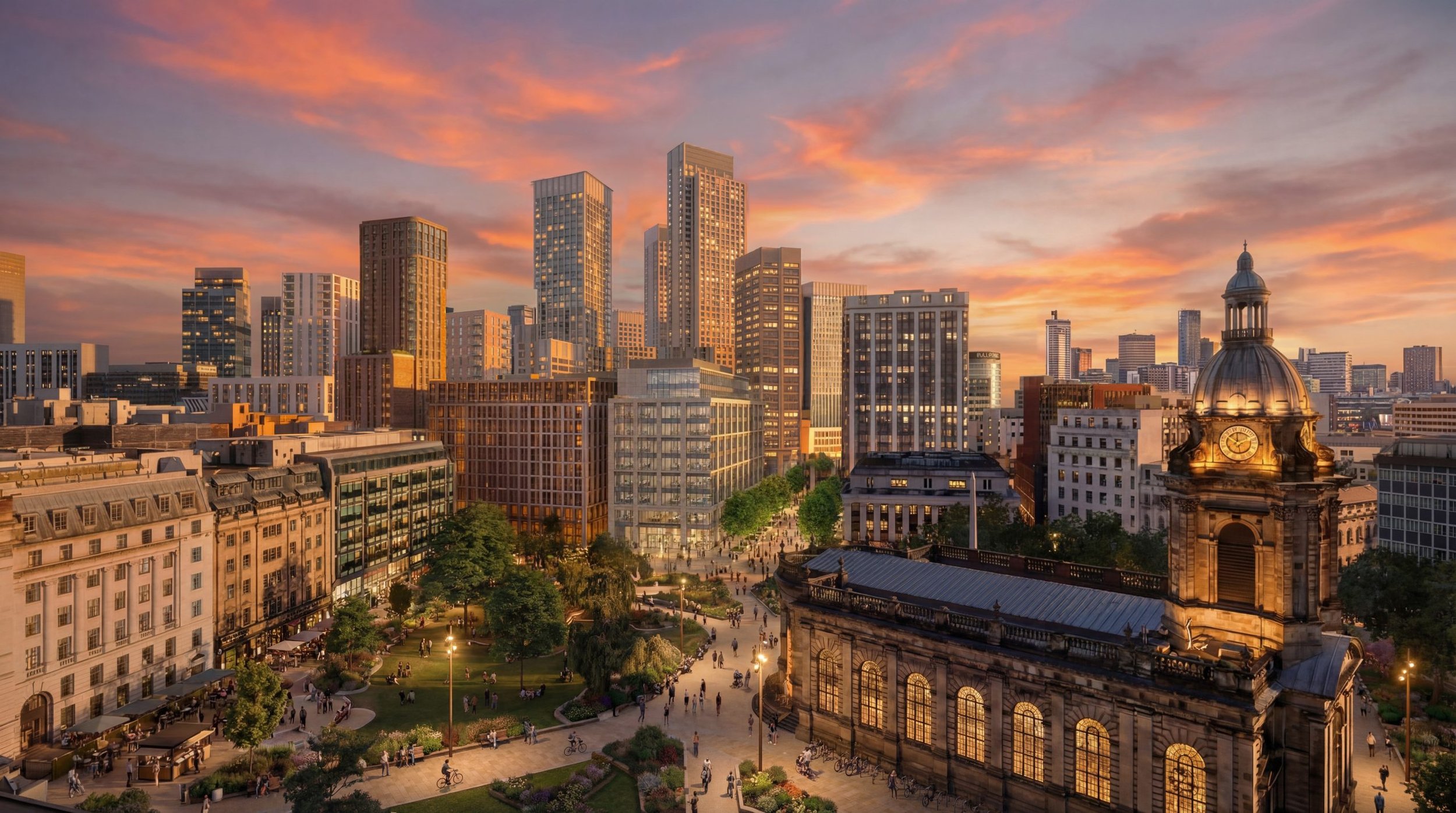
Birmingham Central Heart: A glossy prospectus with a real delivery plan
Greater Manchester pointed to its Good Growth Fund as the missing link between public intent and private investment. Liverpool City Region arrived with a £2bn investment fund and the confidence to deploy it.
The message from our cities and regions was consistent: we've got the strategy, now its time for delivery. That shift in tone proved critical for how opportunities were presented.
There was still room for a glossy prospectus — and some of the visualisations on show were genuinely impressive (see Birmingham Central Heart for a great example!) — but it was increasingly clear that a beautiful CGI without a credible delivery plan lands flat.
Investors and decision-makers are too sophisticated to be moved by renderings alone. The question being asked at every stand and every roundtable was the same: how does this actually get built?
Nobody is pretending the market is easy. Viability remains a genuine constraint, funding gaps are real, and the cost environment continues to test even the most well-capitalised projects and investors.
But there was a confidence at MIPIM that the public and private sector are beginning to pull the right levers — through infrastructure investment, public-private co-investment models, reformed planning frameworks, and a political willingness to back delivery with real tools.
Ultimately, that's what MIPIM is for.
It’s not really about deals done over rosé on the Croisette, or the panels and speaking slots - it’s about doing the work which gets a family into a new home, creates a well-paying job, and enables a sunny Saturday afternoon to be spent in a place which simply didn’t exist a decade ago.
MIPIM 2026 felt like a sector that hasn't lost sight of that.