
Record planning applications for new homes: So, what’s the problem?
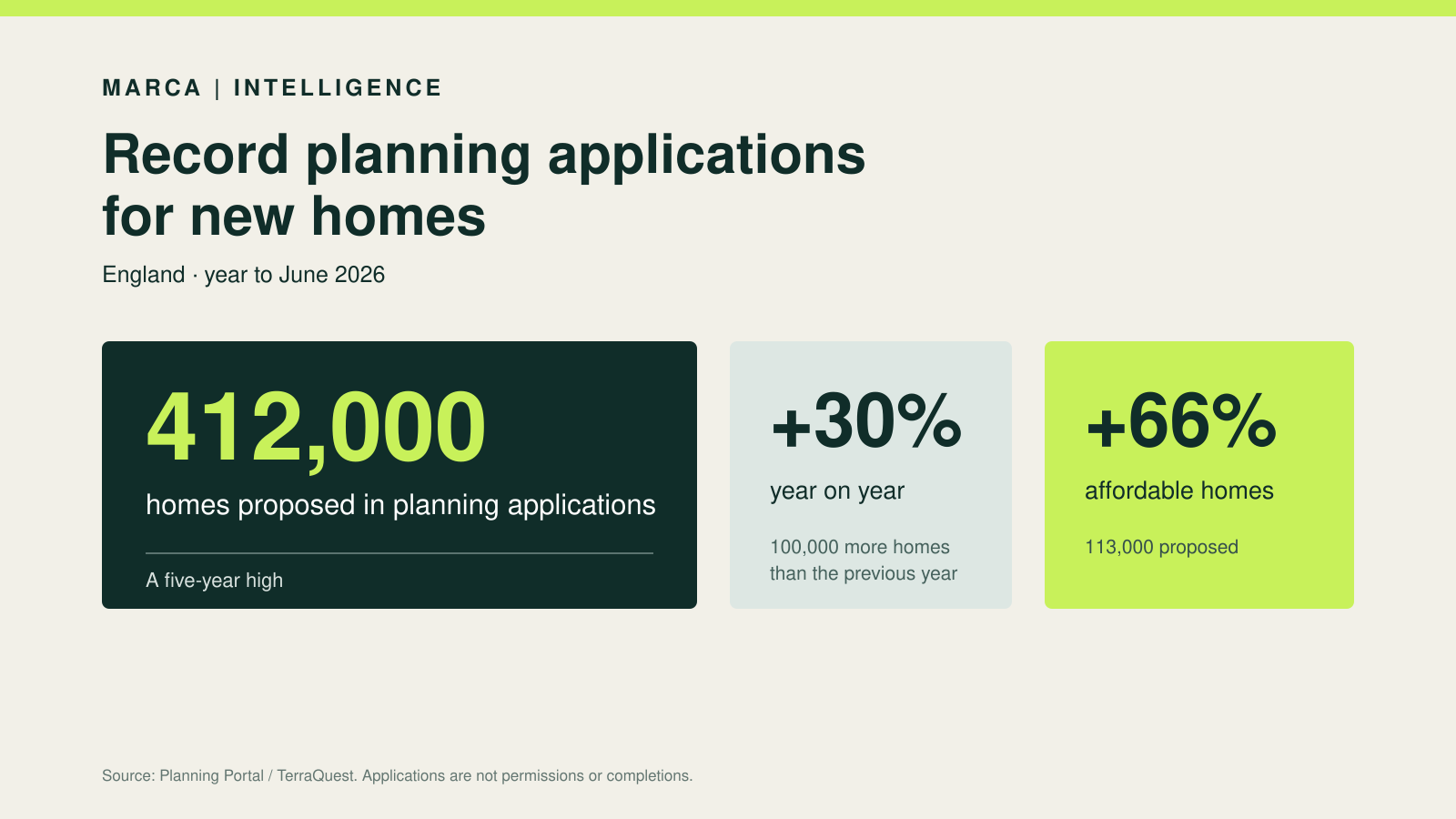
Developers submitted planning applications for 412,000 homes in England in the year to June 2026, according to Planning Portal. That is 100,000 more than during the previous 12 months and the highest figure for five years.
The scale of applications has also increased. The average number of homes proposed per scheme has risen by around 50 per cent, while the number of affordable homes applied for is up 66 per cent.
In purely numerical terms, the pipeline is comfortably above the average of 300,000 homes a year needed to meet the Government’s 1.5 million-home target. But applications and completed homes are very different measures.
Restored housing targets, the introduction of the “grey belt” and wider planning reforms appear to have improved developer confidence. The deadline for submitting Local Plans under the current system has also accelerated plan-making. The new National Scheme of Delegation will also help make decision-making faster and more consistent.
This is genuine evidence that reform is having an effect. So why does it not feel like a breakthrough?
Firstly, delivery will always lag behind applications and consents. Even if a significant proportion of these homes secure permission by early 2027 many, particularly those within the largest schemes, will not be delivered at scale during this Parliament.
That gap inevitably grows with complexity. Larger developments and New Towns can provide substantial housing, infrastructure and community benefits, but they can also take years to progress through detailed design, infrastructure works and phased construction.
Secondly, the housing market remains subdued. Higher borrowing costs and affordability pressures are constraining demand. Housebuilders will only build at the rate at which local markets can absorb new homes. In some places that rate is painfully low.
Thirdly, viability is an ever-present challenge. Elevated construction costs, infrastructure requirements, affordable housing obligations and increasingly complex regulation are being layered on top of weak demand.
Even where permission is secured, these pressures can make homes difficult to finance, slow to deliver or prevent them being built at all.
So far, the Government has moved faster on planning reform than on creating the economic conditions needed to turn permissions into homes.
The National Housing Bank and other interventions intended to unlock investment are welcome. There could yet be more to come under the 'Rewiring the State' devolution agenda.
But ministers must now give real attention to development finance, infrastructure funding, mortgage affordability and viability.
A revived Help to Buy scheme is reportedly under consideration. This would represent a significant political shift for Labour and would not be easy for MPs to stomach. But whatever mechanism is chosen, the demand side of the market cannot be ignored.
Nevertheless, the Government deserves credit for supporting a stronger national pipeline. Its next challenge is to turn that pipeline into cranes on skylines, homes under construction and, ultimately, keys in doors.