
What Warwickshire’s new unitary councils mean for planning and development
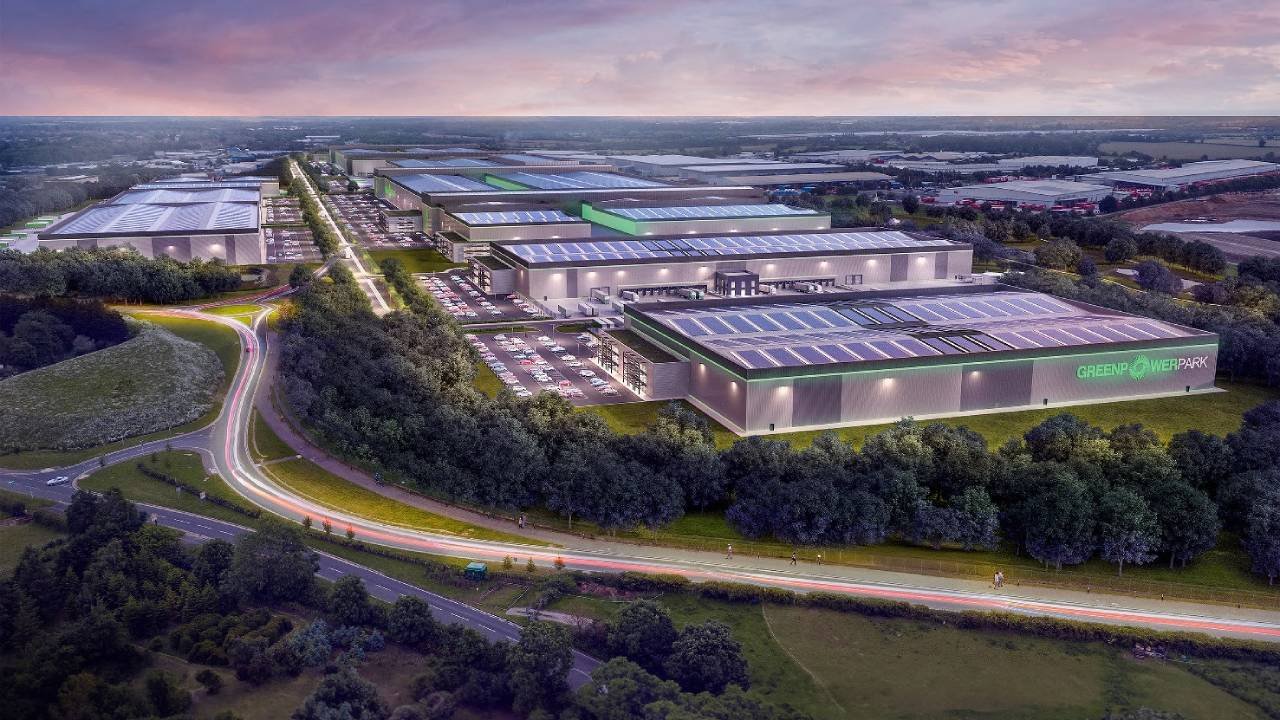
Greenpower Park, which will be located in South Warwickshire Council in 2028
The Government has confirmed the biggest change to local government in Warwickshire for more than 50 years.
In 2028, Warwickshire County Council and the county’s five district and borough councils will be replaced by two new unitary authorities:
North Warwickshire Council, covering North Warwickshire, Nuneaton and Bedworth, and Rugby.
South Warwickshire Council, covering Warwick and Stratford-on-Avon.
The decision brings greater long-term clarity. For developers, investors and communities, however, the management of the transition is critical.
Two very different propositions
In South Warwickshire, the decision formalises a relationship that has been developing for several years.
Warwick and Stratford-on-Avon district councils already collaborate across a range of services and are jointly preparing the South Warwickshire Local Plan.
The area has long been treated as a coherent economic geography, encompassing Warwick, Leamington Spa, Stratford-upon-Avon and their surrounding communities. Indeed, the two councils nearly merged independently in 2022 before it was called off.
This existing relationship should provide the new South Warwickshire Council with a relatively strong foundation. That does not make integration simple, but it means many of the strategic conversations about growth, infrastructure and spatial planning are already taking place across the new authority’s boundaries.
The position in the north is more complicated.
North Warwickshire, Nuneaton and Bedworth, and Rugby have less experience of working together as a single geography. Rugby was also the only district or borough council to support Warwickshire County Council’s proposal for one county-wide authority.
The three areas have different political cultures and economic priorities. North Warwickshire has close relationships with Solihull, Birmingham and the logistics economy; Nuneaton and Bedworth has a stronger economic relationship with Coventry; while Rugby looks east as well as west and has its own substantial growth agenda with access to strategic transport infrastructure along the M6 and A5.
Creating a shared vision for North Warwickshire will be one of the new authority’s earliest strategic challenges.
The long-term opportunity
For planning and regeneration, the potential benefits of unitary government are significant.
At present, planning decisions sit primarily with district and borough councils, while responsibilities including highways, transport and education sit with the county council. Bringing these functions together should create better alignment between development, infrastructure investment and economic strategy.
In principle, this could make it easier to coordinate strategic growth, allocate infrastructure funding and resolve issues that currently cross organisational boundaries.
It may also create authorities with greater capacity to pursue major regeneration opportunities and engage with the West Midlands Combined Authority, government departments and institutional investors.
What happens to planning policy?
The announcement does not reset Warwickshire’s planning system overnight.
Existing adopted and emerging Local Plans will remain part of the unitary development plan until they are replaced at the next cycle. Planning applications will continue to be assessed against the relevant policies for each area throughout the transition.
Work on the emerging South Warwickshire Local Plan is also expected to continue. Its joint preparation means the plan is already aligned with the geography of the future southern authority, reducing one of the potential risks created by reorganisation.
The position in the north may require more work over time. The new council will inherit three separate planning policy frameworks and will eventually need to consider how these are brought together through a new authority-wide plan in future years.
That process could reopen important questions about housing distribution, employment land, infrastructure priorities and the relationship between the three areas.
The immediate risk
Shadow authority elections are expected in May 2027, with the new councils formally assuming responsibility for services in 2028.
Between now and then, significant political and organisational energy will be absorbed by creating the two authorities. Services and IT systems will need to be integrated, new governance arrangements established and senior leadership teams appointed.
There will also be difficult decisions about staffing, office locations, departmental structures and how different organisational cultures are brought together.
For the development industry, this period should be treated as a delivery risk. Day-to-day planning services will continue, but senior officer capacity and political attention are finite. Decisions may take longer as the councils manage the transition alongside their existing responsibilities.
The appointment of chief executives and senior planning, regeneration and infrastructure officers will be particularly important. These individuals will have considerable influence over the culture and priorities of the new organisations - although many may decide to look at other opportunities.
No reason to change course – but plan for disruption
The Government’s decision provides certainty about Warwickshire’s future local government structure. In the long term, two unitary councils should create better alignment between planning, infrastructure and economic development.
But simplicity does not guarantee better delivery. The quality of political leadership, senior appointments and the relationships formed between the constituent areas will determine whether the new authorities fulfil their potential.
For projects already moving through the planning system, there is no immediate reason to change strategy. However, programmes should allow for the possibility of slower decision-making and changing political and officer relationships over the next two years.
The challenge for the county and the districts will be getting there without allowing the reorganisation to distract from the investment, development and infrastructure decisions the county needs today.